Skip to content
Search for advertising ppc & pay-per-click and you will find a wall of jargon. Quality Score, Ad Rank, impression share. None of it explains what you are actually paying for.
Here is the short version.
PPC, short for pay-per-click, means you only pay when someone clicks your ad. Not when they see it or scroll past it, only when they click.
That single rule changes how you should think about advertising. You are not buying attention. You are buying an actual visit to your website, one click at a time. This guide breaks down what PPC and pay-per-click really mean, what platforms charge, and how to keep your spend under control.
Key Takeaways
- Pay per click charges you for results, a click, not for exposure, so every euro or pound spent is tied to a measurable action on your site.
- Your actual cost per click is decided by an auction combining your bid and your ad’s relevance, which means better targeting can lower your costs more reliably than a bigger budget.
- Google Ads and Facebook Ads solve different problems, one captures existing intent and the other builds awareness, so the smartest accounts usually use both rather than picking one.
- There is no universal “good” cost per click. What matters is whether the cost of acquiring a customer still leaves you a profit once you factor in what that customer is worth.
- New campaigns need time and data before they perform well, and judging results too early is one of the most common ways businesses waste their ad budget.
- Managing PPC yourself is completely workable at a small scale, but the time and learning costs usually justify specialist help once budgets or ambitions grow.
Ppc & pay-per-click defined simply
Pay-per-click, usually shortened to PPC, is an advertising model where a business pays a fee each time someone clicks one of its ads. The ad itself is free to show. You are charged for the click, not the impression.
Think of it like a shop that only charges you rent for the minutes a customer is actually browsing inside. The window display costs nothing. The moment someone walks through the door, the meter starts running. That is the whole idea behind per click pricing.
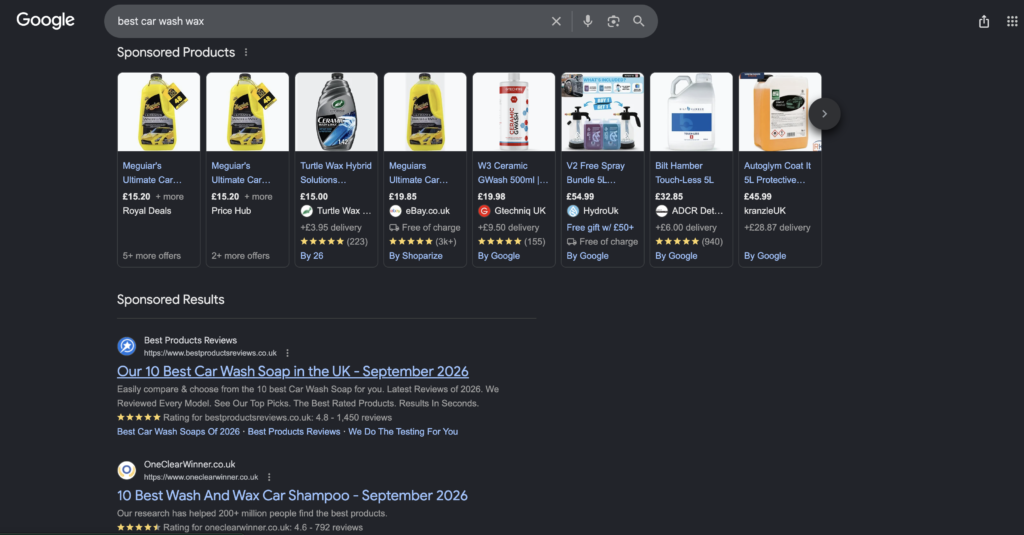
This is different from other advertising formats. A billboard or a print ad costs the same whether ten people notice it or ten thousand. A pay-per-click ad only costs you money when it produces an actual, measurable action, someone clicking through to your site.
That measurability is the real appeal. You can see exactly how many clicks you paid for, what they cost, and what happened after someone landed on your page. Few other forms of advertising offer that level of accountability.
|
GoClick Media Pro Tip: Before you spend a single euro or pound on PPC ads, install proper conversion tracking. If you cannot see which clicks turned into a phone call, a form fill, or a sale, you are flying blind no matter how good your cost per click looks on paper. |
How PPC ad platforms charge per click
Every major platform, Google, Meta, Microsoft, LinkedIn, runs on some version of an auction. When someone searches or scrolls, an instant auction decides which ads appear and in what order. Advertisers do not simply name a price and pay it.
Here is how it actually works. You set a maximum amount you are willing to pay per click, known as your maximum bid. The platform combines that bid with a quality signal, things like how relevant your ad and landing page are to the search or audience, to work out your Ad Rank.
The clever part is what happens next. Most platforms use a variation of a second-price auction. You do not pay your maximum bid. You pay just enough to beat the advertiser ranked below you, often a good deal less than what you were prepared to spend.
This is cpc explained in one sentence. Your actual cost per click is set by competition and relevance, not by a fixed price list, and a well-targeted ad with strong relevance can win clicks more cheaply than a bigger budget with a sloppy setup.
Quality matters more than most business owners expect. Google has said for years that a highly relevant ad and landing page can lower your cost per click while a poorly matched one inflates it, even at the same bid. Northern Ireland advertisers who tighten their keywords and landing pages tend to see this effect quickly, since local search terms usually face less competition than equivalent searches in London or Manchester.
Google Ads vs Facebook Ads: a PPC and pay-per-click comparison
Google Ads and Facebook Ads both charge per click, but they are selling something different. Google Ads mostly sells intent. Someone has typed a search, so they are already looking for what you offer. Facebook Ads mostly sells attention, interrupting someone’s scroll with an offer they were not actively searching for.
That difference shows up clearly in the numbers. Industry data from 2025 and 2026 puts the average UK cost per click across all industries at roughly £2.32, with a typical range of £0.50 to £5.00 depending on the sector. In Ireland specifically, Google Ads pricing splits sharply by industry, from around €0.50 to €2 per click for retail and ecommerce, up to €5 to €15 or more for legal services.
Google Ads cost Ireland at a glance
To put actual figures on the google ads cost ireland question, here is roughly what different sectors were paying per click going into 2026.
Home services and trades typically sat between €1 and €5 per click. Healthcare and dental ran from €2 to €7. Professional services averaged €2 to €8, and financial services, one of the most competitive categories anywhere, ran €4 to €12 or higher. Tourism and hospitality stayed cheaper, often €0.80 to €2.50, reflecting lower competition for those search terms.
Facebook Ads costs sit lower on average but vary just as widely by sector. Recent 2026 benchmarks put average Facebook cost per click somewhere between $0.62 and $1.14, with cheaper categories like apparel around $0.45 and pricier ones like finance climbing past $3.
|
GoClick Media Pro Tip: Do not choose a platform purely on which one has the lower advertised cost per click. A €0.90 Facebook click that never converts is worse value than a €6 Google click from someone actively ready to buy. Match the platform to the buying stage your customer is at. |
The practical takeaway for most Northern Ireland businesses is to run both, but for different jobs. Google Ads captures people already searching for what you sell, so it tends to convert faster. Facebook and Instagram build awareness and warm up an audience that has not started searching yet, which pays off over a longer run rather than an instant one.
What’s a good PPC cost per click?
There is no single “good” cost per click. A good cost per click is one that still lets you turn a profit once you account for your close rate and average order value. A €10 click that reliably becomes a €2,000 contract is a bargain. A €0.50 click that never converts is expensive at any price.
That said, some reference points help. Across UK industries, the average Google Ads conversion rate sits around 7.52%, with auto repair, pet services, and physicians converting well above that average, while finance, insurance, and furniture typically convert below 3%. Average cost per lead across industries lands around £70, ranging from roughly £28 for auto repair up to well over £130 for legal services
Working out your own good PPC cost per click
Instead of comparing yourself to a stranger’s average, work backwards from your own numbers. Take what a new customer is worth to your business, decide how much of that you are willing to spend to acquire them, then divide by your website’s conversion rate. That calculation tells you the maximum you can afford to pay per click and still turn a profit.
For example, if a new customer is worth £500 to your business and you are comfortable spending 20% of that on acquisition, your budget per new customer is £100. If one in twenty visitors to your site becomes a customer, you can afford to pay up to £5 per click and still hit your numbers. That is a far more useful benchmark than any industry-wide average.
Rising costs are the most common complaint advertisers raise about paid search right now, driven by more businesses bidding and increasingly automated bidding systems. The response is not to panic about cost per click in isolation. It is to focus on cost per acquisition, the number that actually determines whether the campaign makes money.
How to control your PPC spend?
Controlling your spend starts with your daily and monthly budget caps, which every platform lets you set upfront. That is the blunt instrument. The more useful controls sit underneath it, in how tightly you target who sees your ads and how efficiently your account is structured.
Negative keywords are one of the fastest wins available. These tell Google which searches you do not want to appear for, cutting off clicks from people who were never going to buy. A Belfast plumber running search ads without negative keywords like “jobs” or “how to fix” will bleed money on clicks that were never commercial in the first place.
Geographic targeting matters just as much here in Northern Ireland. Splitting NI-only campaigns from all-island or UK-wide campaigns stops you paying for clicks from areas you cannot service, and lets you write ad copy and offers that actually match local delivery and pricing rules.
|
GoClick Media Pro Tip: Give new campaigns time before judging them. Meta generally needs around 50 conversions in a week before its algorithm settles down and starts finding cheaper, better-matched clicks. Pulling the plug in week one, before the system has learned anything, is one of the most common ways businesses waste ad spend. |
Bidding strategy is the other lever. Manual bidding gives you full control over what you pay per click but demands constant attention. Automated strategies like Maximise Conversions hand pricing decisions to the platform’s algorithm, usually producing more efficient results once enough conversion data has built up, though they need a steady flow of data to work well.
Should you manage PPC yourself?
Plenty of Northern Ireland business owners start out running their own campaigns, and there is nothing wrong with that. If your budget is modest and your offer is simple, a well-built DIY campaign with tight targeting and clear tracking can perform perfectly well without outside help.
The trouble usually starts once budgets grow or the account gets more complex. Running Google Ads and Facebook Ads alongside each other, tracking conversions properly across both, and adjusting bids as costs shift takes real time every single week. Most owners already have a business to run, and PPC management competes directly with that for their attention.
There is also a learning cost that rarely gets counted. The first few months of any new account tend to be the most expensive per click, simply because the account has not yet gathered enough data to know which keywords, audiences, and ad copy actually work. An experienced hand can shorten that expensive learning period considerably.
That is generally the point where bringing in specialist help starts to pay for itself, not because DIY is wrong, but because the time saved and the mistakes avoided are usually worth more than the fee. Go Click Media manages Google Ads, Meta Ads, and LinkedIn Ads for businesses across Northern Ireland, and every account starts with a straightforward audit of what you are currently paying per click and where that budget is actually going.
The bottom line on PPC and pay-per-click
Pay per click is not complicated once you strip away the jargon. You pay for clicks, not impressions, prices are set by auction rather than a fixed rate card, and the platform you choose should match where your customer is in their buying journey. What separates a profitable campaign from a wasted budget is rarely the platform. It is whether someone is watching the numbers closely enough to know what a good cost per click actually looks like for your business.
If you want a second opinion on what you are currently paying per click, or you are weighing up Google Ads against Facebook Ads for the first time, Go Click Media offers a straightforward consultation to walk through your options. Get in touch with our team and we will look at your goals, your market, and your budget, then tell you honestly whether PPC makes sense for your business right now and how to get the most from every click you pay for.
What does PPC and pay-per-click actually mean in advertising?
PPC stands for pay-per-click, meaning you are charged only when someone clicks your ad, not simply because it was shown. This links your spend directly to an action rather than to how many people happened to see the ad.
Is pay per click the same as PPC?
Yes. PPC is simply the shorthand for pay-per-click advertising, and you will see both terms used interchangeably across Google Ads, Meta Ads, and LinkedIn Ads.
Why did my cost per click go up without me changing anything?
Auctions respond to competition, so if more advertisers start bidding on the same keywords or audience, prices tend to rise even if your own campaign settings stay identical. Seasonal demand and changes to your Quality Score can also move your price per click.
Do I pay if my ad is only seen and not clicked?
No. Under a standard pay-per-click model you pay nothing for impressions that do not result in a click, which is what separates it from older media like print or billboards.
How much should a small business in Northern Ireland budget for PPC?
It depends heavily on your sector and goals, but many small local businesses in Ireland and Northern Ireland start somewhere between €500 and €1,000 a month, scaling up once early campaigns prove their cost per acquisition works.
Can I run Google Ads and Facebook Ads at the same time?
Yes, and many businesses get the best results doing exactly that. Google tends to capture people already searching for a solution, while Facebook builds awareness among people who have not started looking yet.
When does it make sense to hire a PPC specialist instead of managing it myself?
Once your account spans multiple platforms, your budget grows, or you simply do not have the weekly hours to watch bids and conversions closely, professional management usually pays for itself. Go Click Media offers a free initial consultation to help you work out whether that point has arrived for your business.