Skip to content
If you have never run a paid campaign before, advertising pay per click can feel like a different language. Auctions, quality scores, bid caps, learning phases etc. It is a lot to take in when you are simply trying to work out whether this is worth your money an an investment.
Strip away the jargon and the idea is simple. You pay a platform each time someone clicks your ad, not for the ad to be shown. Get that click to convert into an enquiry later in the process, a booking or a sale, and the final maths starts working in your favour.
This guide walks Northern Ireland and Republic of Ireland business owners through what advertising pay per click actually involves, how the two biggest platforms work, what a realistic first budget looks like, and how long it takes before you see results. By the end, you will have enough grounding to make a confident decision, whether you run campaigns yourself or bring in an agency.
Key Takeaways
- Paid advertising only rewards you when the fundamentals are right first. Tracking, landing pages and budget sizing matter more than the platform you choose.
- Treat your first month as a data-gathering exercise, not a results exercise. Judging performance too early is the most common reason businesses give up too soon.
- Match your budget to your sector’s real conversion economics, not a number that simply feels affordable.
- Local market knowledge is a measurable cost advantage in Northern Ireland, not just a nice-to-have.
- Cross-border businesses need separate campaign logic for NI and RoI audiences, not one blended approach.
- Consistent, honest reporting matters more long-term than a low headline cost per click.
What Is Pay-Per-Click Advertising? A Plain Guide to Advertising Pay Per Click
Pay-per-click advertising is a model where you only pay when someone clicks your ad. It sits at the top of Google search results, inside Facebook and Instagram feeds, and across thousands of partner websites. You are not renting space for a fixed period. You are paying for action.
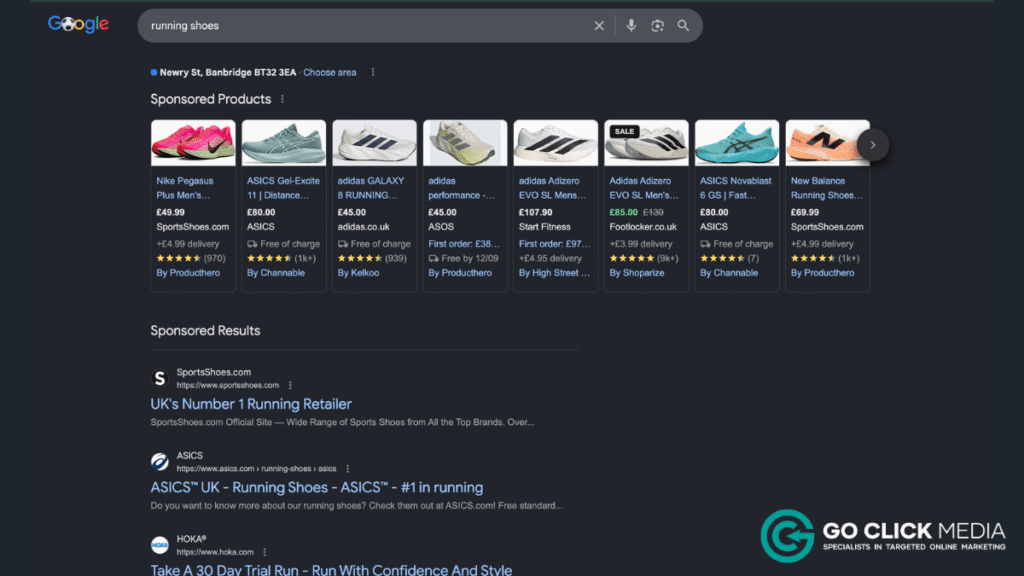
That single distinction is what makes advertising pay per click attractive to smaller businesses. A local joiner in Lisburn does not need a six-figure media budget to compete. He needs a well-targeted campaign, a clear offer and a landing page that converts the traffic he is already paying for.
The Core Idea Behind Advertising Pay Per Click
At its simplest, advertising pay per click runs on an auction. Advertisers bid on keywords or audiences relevant to their business. The platform then decides who gets shown, and at what position, based on a mix of bid amount and ad quality.
This matters because advertising pay per click rewards relevance, not just budget. A smaller advertiser with a tightly targeted, well-written ad can regularly beat a bigger competitor who is bidding broadly and paying for clicks that were never going to convert.
Northern Ireland has a natural advantage here. With roughly 81,135 VAT and PAYE registered businesses across NI, and around 89% of those being micro businesses with fewer than 10 employees, competitive density in most local sectors is lower than in London, Manchester or Dublin. That means well-run advertising pay per click campaigns often win valuable search terms at a lower cost than the same campaign would cost in a bigger UK city.
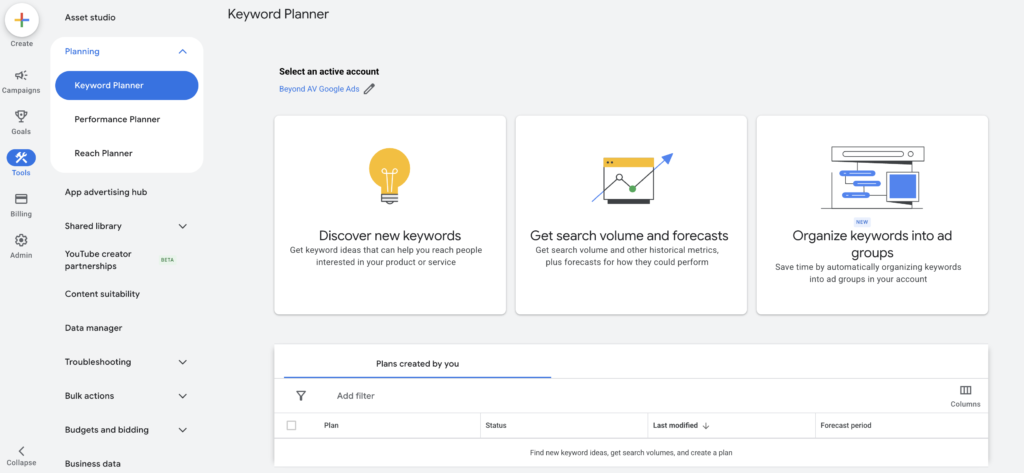
Before you setup a single ad, it helps to know exactly what your best customers type into Google. Most NI business owners guess at keywords instead of checking search data, and end up paying for advertising pay per click traffic that was never going to buy.
|
GoClick Media Pro Tip: Use Google’s own Keyword Planner to research your terms before you spend a penny. It is free, and because the search volume and cost data comes straight from Google rather than a third-party estimate, it is the most reliable starting point for any advertising pay per click campaign. |
How Google Ads PPC Works
Google Ads is the largest platform for advertising pay per click and, for most Northern Ireland businesses, the sensible starting point. Search still accounts for 44% of UK digital ad spend, the largest single channel, and Google holds roughly 92.6% of the UK search market.
When someone searches a term you are bidding on, Google runs an instant auction. Your position is decided by your maximum bid multiplied by your Quality Score, a rating based on how relevant your ad and landing page are to that search. A higher Quality Score can win you a better position for a lower cost per click than a competitor with a bigger budget but a weaker ad.
Google Ads now leans heavily on automated bidding, known as Smart Bidding, which optimises toward conversions or conversion value rather than clicks alone. For businesses running advertising pay per click for the first time, this automation removes a lot of the manual guesswork, but it still needs clean conversion tracking to work properly.
Campaign structure typically starts with three layers. A brand campaign captures people already searching your business name. A generic or category campaign targets people searching for what you sell. Shopping or Performance Max campaigns then extend reach across Google’s wider network once you have enough conversion data for the algorithm to learn from.
For Northern Ireland businesses that also serve the Republic of Ireland, this is where google ads ireland targeting gets more technical, and where a generic UK-wide setup starts costing you money. Currency, delivery terms and even ad copy often need to differ between a .co.uk audience and a .ie audience, so a single undifferentiated campaign tends to underperform on cross-border traffic.
|
GoClick Media Pro Tip: If you sell into both Northern Ireland and the Republic, split your Google Ads campaigns by geography from day one. Blending NI and RoI traffic into one campaign makes it almost impossible to see which market is actually converting. |
How Meta (Facebook) PPC Works
Meta, covering Facebook and Instagram, works differently to Google. Google captures demand that already exists. Meta creates it, by putting your ad in front of people based on interests, behaviour and lookalike audiences, before they have started actively searching.
For Northern Ireland’s SME market, this matters. Facebook still drives around 69% of UK social referral traffic, and it remains the dominant platform for local, consumer-facing NI businesses running paid social. Instagram tends to perform better for product-led and visually driven brands, while TikTok offers reach without guaranteed engagement.
Meta’s ad system, like Google’s, is built around machine learning. Meta states that an ad set generally needs around 50 optimisation events in a week to exit what it calls the learning phase and start performing efficiently. Below that volume, an ad set can get stuck in “learning limited” status, where costs are less predictable and results are inconsistent.
This is a common trap for NI businesses new to advertising pay per click on Meta. They set a small daily budget, spread it across several ad sets, and then judge the platform as ineffective after a week, when in reality none of those ad sets ever generated enough data to leave the learning phase.
Meta’s Advantage+ campaigns now automate much of the targeting and placement decision-making, which suits businesses without an in-house media buyer. The trade-off is that Advantage+ needs a genuine conversion signal, ideally through both the Meta pixel and Conversions API, to optimise properly rather than guessing.
Done well, ppc ads on Meta are one of the most cost-effective ways for a Northern Ireland business to build awareness and generate leads at the same time, particularly in tourism, hospitality, retail and trades, where the buying decision is often driven by seeing the right offer at the right moment. Many NI business owners still think of ads pay per click purely as a Google product, and overlook how much cheaper a lead can be when Meta is doing the early groundwork.
Setting Your First PPC Budget
This is the question almost every business owner asks first, and it is the one advertising pay per click guides answer least honestly. The truth is that your budget needs to be sized around what the algorithm needs to learn, not around a round number that feels comfortable.
|
GoClick Media Pro Tip: Work backwards from your target number of leads, not forwards from a budget you feel comfortable spending. A campaign funded to generate five leads a month behaves completely differently to one funded to generate fifty, even on the same platform. |
For most Northern Ireland small and medium businesses, typical monthly media spend on ads pay per click sits somewhere between £500 and £2,000. The smallest local campaigns often start around £300 to £500 a month, while established e-commerce or lead generation accounts commonly run £5,000 to £50,000 or more, depending on the sector and ambition.
On top of media spend, most agencies charge either a percentage of ad spend, typically 10% to 20%, or a fixed monthly retainer, often £300 to £1,500 for an SME-sized account. Some specialist PPC agencies set a minimum monthly ad spend threshold, often around £1,000, before they will take on a new account, simply because smaller budgets rarely generate enough data to optimise properly.
Cost benchmarks give a useful sense-check. The average cost per click across UK industries sits around £2.32, with average cost per lead around £70.11, though this varies enormously by sector. Legal and financial leads regularly cost well over £100 each, while trades and local services often convert far more cheaply, sometimes under £30 per lead.
The sector you operate in changes this maths significantly. Average conversion rates on Google Ads sit around 7.52% across all industries, but auto repair (14.67%) and pet-related businesses (13.07%) convert far more easily than finance and insurance (2.55%) or furniture retail (2.73%). Knowing where your industry sits helps you set a budget expectation that is grounded in reality rather than guesswork.
Expected Results Timeline
One of the most common frustrations with advertising pay per click is timing expectations against reality. Paid search and paid social are not instant. They need a settling-in period before the numbers start to mean anything.
In the first one to two weeks, platforms are still learning. Google, Meta, LinkedIn and Microsoft all recommend a stabilisation window before you judge performance or make major changes. LinkedIn specifically advises allowing two weeks before adjusting a new campaign, and Meta’s guidance points to a similar window for ad sets to exit learning.
By weeks three and four, you should start seeing a clearer pattern in cost per click and conversion rate, assuming your tracking is set up correctly. This is also when it becomes obvious whether your landing page is doing its job, because traffic volume by this point is usually enough to expose weak conversion points.
From month two onward, most accounts move from a testing phase into a refinement phase. Underperforming keywords, audiences or ad creative get paused, and budget shifts toward what is actually converting. This is where advertising pay per click campaigns typically start to show a real return, rather than simply generating clicks.
By months three to six, a well-managed account should be showing a stable, repeatable cost per lead or cost per acquisition. Across UK industries, around 65% saw conversion rates improve through 2025, which reinforces a simple point. A smart, well-optimised strategy outperforms a cheap one, even when the cheap one has a lower headline cost per click.
Advantages of Working with a PPC Agency in Ireland
Running your own ppc ads is entirely possible, and plenty of Northern Ireland business owners manage advertising pay per click campaigns. But there are specific, provable advantages to working with a local ppc agency ireland businesses can actually reach by phone, rather than a faceless UK-wide platform.
Local knowledge changes outcomes directly. A ppc agency ireland based team understands place names, dialect, seasonal demand patterns and the difference between how a Belfast audience and a Dublin audience search for the same service. That local nuance improves ad relevance and Quality Score, which in turn lowers your cost per click.
Cross-border fluency is another genuine edge. Handling .co.uk versus .ie search intent, GBP versus EUR pricing, and the regulatory difference between UK GDPR and Irish data protection guidance is not optional if you sell across the border. A specialist ppc agency ireland team builds this into campaign structure from the outset, rather than retrofitting it after a campaign has already underperformed.
Northern Ireland’s business culture also rewards local relationships. Reputation travels fast here, and word of mouth still carries real commercial weight. A local team you can meet, question and hold accountable tends to earn more trust than a call centre reading from a script, and that trust shows up in how honestly your results get reported.
|
GoClick Media Pro Tip: Ask any agency you are considering to show you a real account structure, not just a results screenshot. A results graph tells you nothing about whether the account is actually built to scale. |
There is also a simple resourcing argument. Running advertising pay per click properly means daily bid monitoring, weekly optimisation, ongoing creative testing and monthly reporting. For a business owner already stretched across sales, operations and staffing, that is a lot of specialist time to find, especially when platforms like Google Ads and Meta update their systems constantly.
GoClick Media Can Help You Get This Right
Advertising pay per click rewards businesses that treat it as a discipline, not a one-off spend. The mechanics, from Google’s Quality Score to Meta’s learning phase, all reward patience, clean tracking and realistic budgeting over guesswork.
Northern Ireland’s market gives local businesses a genuine edge here. Lower competitive density, a relationship-driven buying culture and a growing cross-border opportunity all mean that a well-run advertising pay per click campaign can outperform what the same budget would achieve in a bigger, more crowded market.
If you are weighing up whether to run your own campaigns or bring in specialist help, GoClick Media works with Northern Ireland and Republic of Ireland businesses to build google ads ireland and Meta campaigns around realistic budgets and honest reporting. Contact GoClick Media today for a free consultation, and we will walk you through exactly what a first campaign could look like for your business.
Is pay-per-click advertising worth it for a small Northern Ireland business?
Yes, provided the budget is sized to generate enough data for the platform to learn from. Small, under-funded campaigns tend to underperform not because the model is flawed, but because they never reach a volume where results become reliable.
How much should a small business budget for its first campaign?
Most NI small businesses start somewhere between £300 and £1.500 a month in media spend, with agency fees on top if using a managed service. The right number depends on your sector’s typical cost per lead and how many leads you need each month to make the campaign worthwhile.
Should I choose Google Ads or Meta first?
It depends on how your customers buy. If people actively search for what you sell, start with Google. If your product or service relies on visual appeal or impulse decisions, Meta often performs better as a starting point.
How long before I see a return on paid campaigns?
Expect two to four weeks of learning before results stabilise, and three to six months before cost per lead becomes consistently predictable. Businesses that judge results in the first week are usually acting too early.
Is it worth using a local agency instead of managing campaigns myself?
It depends on your time and appetite for ongoing management. Agencies bring platform expertise, local market knowledge and the time capacity to monitor and optimise daily, which is difficult to match alongside running the rest of a business.
Do I need a different strategy if I sell to both Northern Ireland and the Republic of Ireland?
Yes. Currency, delivery terms, search behaviour and even data protection rules differ across the border, so cross-border sellers g
What is the biggest mistake businesses make with their first campaign?
Underfunding the campaign relative to what the platform needs to learn effectively, then judging it as a failure before it ever had a fair chance to optimise. Patience and clean conversion tracking solve most early performance problems.